Here you'll find all the latest news on the iPhone 6 release date, the rumours, upcoming features and of course specs on the eagerly anticipated iPhone 6 update.
With the iPhone 5 release date still fresh in our minds it is no surprise that the rumour mill is already looking ahead at the next iPhone from Apple whether it's a refresh in the form of the iPhone 5S or the even bigger update in the form of the iPhone 6.
Apple iPhone 6 screen
With the Retina display likely to appear onthe iPhone 5S it would appear as though Apple may shift to a larger iPhone screen for the 6 with reports suggesting the company will finally try and compete with the screen of smartphones like the upcoming HTC J Butterfly.
Reports are flying around that Apple could be looking to implement a 4.8-inch Retina+ IGZO screen made by Sharp which will make the iPhone display thinner, brighter and much clearer boasting better than HD resolutions.
According to those inside the manufacturing industry Sharp is working on making its super HD display iPhone-ready however because the technology is so advanced it’s unlikely to appear on the iPhone 5S with Apple saving the bleeding-edge tech for the likes of the iPhone 6 and possibly even the iPad Mini 2.
Apple iPhone 6 features
With the iPhone 5 featuring the super-fast and super-efficient A6 processor it’s believed that the iPhone 6 will come with the new A7 chip which would be limited to the next-generation iPad and the 6.
The source that suggested this also believes Apple will be looking to launch the iPhone 5S quicker than usual in order to give them enough of a window for the iPhone 6 to be a significant update on the previous model.
A new feature that could well appear on the 6th generation iPhone is the use of sonar as a replacement to the current infared sensors which use sound as a proximity sensor letting the phone detect where it is, either as a way of alerting the user about an incoming object, or as a way of detecting whether the phone is being held to the users ear.
Apple iPhone 6 release date
The Apple iPhone 6 release date could well be one key reason why there may not be an iPhone 5S at all. Tech website Technorati believes that Apple will be looking to regain the wow factor and to do that it needs to restrict its launches to game changing products.
While they could well launch the iPhone 5S as the ‘budget iPhone’ the iPhone 6 will be the next major version of Apple’s smartphone and the website believes that Cupertino could be looking to release it late 2013 possibly even 2014 in order to compete directly with what would surely be the Samsung Galaxy S5.
The new iMac 2012 from Apple is thinner and more powerful than its predecessor but lacking an optical drive. Do you care?
Lest we forget, amid the ballyhoo surrounding the iPad Mini's announcement, that Apple simultaneously promised to give its new iMac range a fresh lick of aluminium. What seems like an eternity later and here we are, typing on said upgrade.
iMac 2012: Size and build
The biggest feat of engineering change rests with the incredibly svelte display, which measures 5mm at its thinnest edge. Used in high-performance engineering, Apple has employed 'Friction-stir welding' to create the super-thin, single piece of aluminium that surrounds the LCD screen.
However, while Apple claims that 40% of volume has been shaved off from the previous generation, the footprint depth of the whole unit is 6.9-inches - half an inch less than that of the iMac 2011.
iMac 2012: Screen
Those with narrow desks might find that the 21.5-inch LED-backlit screen is pressing up against their face, which is apt considering that Apple has actually brought the (non-Retina) 1920x1080 res, IPS LCD, 2mm closer to your nose.
Slap a new coat of anti-reflective 'plasma deposition' tech on the cover glass and you've got the most glare-free display we've ever seen on a desktop. Colours are full and vivid, blacks are full. It's a real showcase piece.
iMac 2012: Performance
Despite the trimming, Apple has managed to up the performance. Supplied with OS X Mountain Lion, the model we looked at had a 2.9GHz quad-core i5 processor at its centre with 8Gb of 1600GHz DDR memory, a 1TB Fusion Drive (more on that below) and a NVIDIA GeForce GT 650M graphics chip. Resource-hungry software, graphically demanding tasks and polygon-shifting games all motored along without a glitch.
It's not revolutionary (similar technology appears elsewhere), but it's more proof that Macs continue to compete with PCs on any level. However, something had to give and, for the first time in the iMac's 15-year history, there's no optical drive.
For some, this will be a necessity and a sour point. For others, they won’t be able to remember the last time they put a CD or DVD into a computer. Apple clearly wants you to ditch physical media, but still offers its SuperDrive (£65) and still supports Remote Disc.
iMac 2012: FusionDrive
Combining HDD and SDD drives to perform power-specific tasks isn't anything new but, in typical Apple fashion, the fiddly management is taken out of your hands. To put it plainly, the 1TB Fusion Drive is, essentially, a partition that uses SSD for things like loading apps quickly and accessing frequent files, while the HDD stores archive material and less-used software.
The clever part is how, depending on what you do and use, the Fusion drive will continually fine-tune its operation to give you the fastest computing experience possible. It sounds like a fragmentation nightmare, but seems to work a treat. Oh, and it only works with Mountain Lion.
iMac 2012: Connections
Connectivity wise, the iMac is bestowed with four USB 3, two Thunderbolt, SD, Ethernet and headphone sockets. All of which are located at the back. There's no FireWire but new dual-array mics for improved background noise elimination – effective in Face Time and Skype calls - and down-firing speakers, which impressed us in terms of high/mid clarity, if not a little bass flat.
iMac 2012: Verdict
The iMac 2012 is superbly crafted, highly-capable and with a screen to die for. Owners of 6th-gen iMacs need not apply, nor do PC fans that equate power to price. But, for anyone requiring the best-looking desktop on the market, which is also highly capable, meet your new best friend.
It's all very confusing in tablet land: one minute Apple's making ten-inch tablets while Google settles for sevens, and the next Apple's making iPad minis and Google's unveiling the Nexus 10.
With a display so good you'll be able to see ghosts, the Nexus is a serious bit of kit for a seriously good price - but is it good enough to beat the latest, greatest iPad, the iPad 4?
Google Nexus 10 vs iPad 4: UK price
The UK price for the Nexus 10 is £319 for the 16GB version and £389 for the 32GB version. The Wi-Fi-only iPad 4 starts at £399 for 16GB, £479 for 32GB and £559 for 64GB. The Wi-Fi + Cellular models are £499, £579 and £659 for 16GB, 32GB and 64GB respectively. Google doesn't currently offer 3G or 4G-enabled Nexus 10s.
Google Nexus 10 vs iPad 4: release date
iPad 4s will start arriving on the 2nd of November, while the Nexus 10 will be "available for purchase" on the 13th of November.
Google Nexus 10 vs iPad 4: content
The Nexus is integrated with Google Play and the iPad with the App Store, and while both services have stacks of apps - 700,000 for Apple and Google alike - Apple's offering has more dedicated tablet apps. From November 13, the same day the Nexus 10 goes on sale, UK Nexus users will be able to access the Play Music service, which has previously been US-only.
Google Nexus 10 vs iPad 4: display
The Nexus 10's screen is the main selling point here: its 10-inch panel runs at 2560 x 1600, achieving a screen resolution of 300ppi. That's far in excess of Apple's resolution, which delivers 2048 x 1536 and 264ppi. The Nexus 10 is a 16:9 display while the iPad is 4:3.
Google Nexus 10 vs iPad 4: processor
The Nexus 10 sports a dual-core Samsung Exynos processor with a quad-core ARM T604 graphics processor. The iPad has Apple's own A6X processor, a dual-core design with quad-core graphics.
Google Nexus 10 vs Apple iPad 4: memory
The Nexus 10 has 2GB of RAM. Apple doesn't publish specifications, but the iPad 4 is believed to have 1GB.
Google Nexus 10 vs Apple iPad 4: operating system
The Nexus 10 runs Android 4.2, aka Jelly Bean. The iPad 4 runs Apple's iOS 6.
Google Nexus 10 vs iPad 4: storage
The Nexus 10 is available with storage capacities of 16GB or 32GB, while the iPad comes in 16GB, 32GB and 64GB versions. Both devices need some of that capacity for the operating system, and neither device has a card slot for additional storage.
Google Nexus 10 vs iPad 4: cameras, sensors and speakers
The Nexus 10 has a 1.9MP camera on the front and a 5MP camera on the rear, while the iPad 4 has 1.2MP on the front and 5MP on the back. iPad cameras are flash-free, whereas the Nexus 10 has an LED flash. The Nexus 10 has stereo speakers and the iPad 4 a single speaker. The Nexus 10 has an accelerometer, a compass, an ambient light sensor and a gyroscope, as does the iPad, but only the Nexus has a barometer. It isn't there to predict the weather: it's to identify your altitude for better GPS performance.
Google Nexus 10 vs iPad 4: battery life
The Nexus 10 has a 9000mAh battery, promising 9 hours of video or 7 hours of web browsing. Apple reckons you'll get 10 hours of web, video or music, and nine hours of browsing using mobile phone networks.
Google Nexus 10 vs iPad 4: network
The Nexus 10 has dual-band 802.11b/g/n Wi-Fi with MIMO (Multiple Input Multiple Output), but there's no 3G or 4G version as yet; Apple's Wi-Fi + Cellular iPad supports both 3G and 4G LTE mobile data. All iPad 4s also support dual-band 802.11n Wi-Fi on the 2.4GHz and 5GHz bands, with support for channel bonding to achieve download speeds of up to 150Mbps. Both devices have Bluetooth 4.0, and the Nexus 10 also has NFC for Android Beam. The Nexus 10 has built-in GPS, while the Wi-Fi iPad does without. The Wi-Fi + Cellular iPad 4 has GPS and GLONASS, the Russian alternative to GPS.
Google Nexus 10 vs iPad 4: dimensions and weight
The Nexus 10 is 263.9 x 166.6 x 8.9mm and weighs 603g. The iPad 4 is 241.2 x 185.7 x 9.4mm and 652g (662g for the Wi-Fi + Cellular model).
So, what is your choice? Google Nexus 10 vs iPad 4?
Google’s Android operating system is used on hundreds of smartphones and tablets. But the flagship Android devices, the ones the company calls “the best of Google,” are labeled Nexus. They are meant to show the world all that an Android device can be, and are designed and sold directly online by Google. Next week, the company will begin offering the latest phone in this line, the Nexus 4.
This new phone is part of a Google-designed portfolio that now includes two other devices: The Nexus 7 and Nexus 10 tablets. The phone, which features a new version of Android, hits the market at a time when Apple has had early success with its iPhone 5, and as Nokia and HTC are bringing out devices with a fresh version of Microsoft’s phone software, Windows Phone 8.
I found the Nexus 4 more evolutionary than revolutionary. It has some nice features and carries on Google’s recent tablet tradition of low pricing. But there’s no knock-your-socks-off stuff in the new phone. Even the new version of Android is just a further iteration of the current variant, called Jelly Bean, rather than an all-new edition, such as Google introduced last year at this time with the prior Nexus phone.
And the Nexus 4 is missing two important features: The ability to use LTE, the most consistently speedy 4G network in the U.S.; and a memory capacity greater than 16 gigabytes, the amount most smartphones start with. The new phone also lacks a memory-expansion slot. The phone’s most touted new capability, the ability to capture 360-degree pictures, worked poorly in my tests.
Otherwise, I found the latest Nexus to be a solid, reliable, phone and a good value. On Nov. 13, Google will begin selling it starting at $299 for an unlocked version — one that has no carrier plan or contract — with a puny 8GB of internal storage. A 16 gigabyte unlocked version will cost $349. You’ll have to add the cost of a contract or prepaid plan from T-Mobile, AT&T or carriers that use the same network technology to those prices (the phone won’t work on Verizon or Sprint). T-Mobile will be offering the 16GB version for $199 with a two-year contract. To grasp how inexpensive the Nexus 4 is, consider that Samsung’s popular Galaxy SIII is about $550 unlocked, $199 with a two-year contract.
The Nexus 4, built for Google by LG of Korea, has a large 4.7-inch screen with high resolution, higher than Apple’s 4-inch Retina display on the iPhone 5, though with slightly fewer pixels per inch because it’s spread over a larger display. The new Nexus is 20 percent thicker than the iPhone 5 and 24 percent heavier. But its curved rear edges made it feel comfortable in my hand.
It’s made of plastic, but is clad in relatively sturdy Gorilla Glass 2 on both front and back. There’s a 1.3-megapixel camera on the front and an 8-megapixel camera on the back. These cameras took sharp, vivid pictures and videos and you can apply filters to snapshots.
While I didn’t do a formal battery test, the Nexus 4 lasted a full workday in mixed use, including Web surfing, lots of app use, email, texting, viewing of short videos, occasional music playback and voice calling.
A new feature in the Nexus 4 allows you to charge the battery, which is sealed inside, without plugging in an adapter, by merely placing it on a charging pad plugged into the wall. These pads, which Google doesn’t sell, must comply with an industry standard called Qi. I had mixed results trying this. I tested it on two Qi pads and only one worked with the Nexus 4.
Instead of LTE, the Nexus 4 relies on a 4G standard called HSPA+, which is more common outside the U.S. This network standard can be as fast or faster than LTE in places, but in my tests comparing the Nexus 4 on HSPA+ with an iPhone 5 using LTE, the differences were often stark. In one location, the two were about the same, at just under 15 megabits per second for downloads. But in two others, in two cities, the Nexus 4 on HSPA+ managed average download speeds of just 2.8 mbps and 3.8 mbps, while the iPhone 5 on LTE averaged nearly 30 mbps. Some other phones offer both LTE and HSPA+.
I found voice calls to be clear and reliable, but the external speaker sounded weak and it’s worse when you aren’t holding the phone because it’s located on the rear.
The phone’s fast processor, coupled with improvements in the new version of Jelly Bean, called Android 4.2, made the Nexus 4’s touchscreen fast and fluid. One new feature of the latest operating system is called Gesture Typing, which allows you to compose text by swiping from key to key, rather than tapping them. This worked fine, but is similar to a system called Swype, which has long been available on other Android phones. Another nice feature in Android 4.2 is improved auto-correction. It now tries to anticipate the next word likely to be typed. So, if you type “Monday,” it suggests “night” and “morning.”
However, I found the most touted new feature on the Nexus 4, an enhanced panorama photo feature called Photo Sphere, disappointing. A Photo Sphere is a 360-degree image of a scene, in which you can pan around to see up and down as well as side to side. Google has made it easy to take such a picture, guiding you with blue dots as you move from around a starting point, automatically adding more of a scene in all directions until you decide to stop.
However, in all four of my Photo Sphere tests the results were poor. Objects like chairs, roofs and even people came out distorted and uneven. Google officials said they couldn’t explain my results.
Also, you can only fully share these Photo Spheres with others, for now, via the company’s Google+ social network. If you email them, they arrive as static scenes.
The new version of Android introduced on the Nexus 4 also has an enhanced version of Google search, which yields more answers, rather than just links, and speaks some of the answers back to you when you search by voice rather than typing. But the same new features were just released in a new version of Google search for the iPhone. In my tests, the iPhone version sometimes gave richer answers, such as hourly temperatures on weather searches, missing from the Android version.
Overall, the Nexus 4 is a good phone, with especially good prices for unlocked versions. But I’d advise Android buyers to consider other models with LTE, better speakers, and the ability to add more memory and work on all carriers.
If you’re serious about your mobile gaming, odds are you would love to find a high quality and easy-to-use controller to replace the onscreen controls for your favorite games. PowerA has an interesting mobile gaming controller called the Moga that is now in stores and available for purchase. The control reminds more than a little of an aftermarket Xbox 360 controller.
The controller portion has dual analog sticks, shoulder triggers, and four action buttons. It also has a flip up arm designed to secure your Android 2.3 or higher smartphone to the controller for gaming on the go. The device is available in over 7000 stores around the country, including Best Buy, Walmart, Toys “R” Us, Amazon, and Gamestop among others.
The company notes that it has hands-on demo stations at Toys “R” Us and in select Best Buy stores allowing users to try the controller out before they purchase. The device also promises to work with some Android tablets. There are already 45 games on the market that support the Moga controller.
Some of the high-end games that support the controller include The Dark Knight Rises HD, N.O.V.A. 3, Sonic CD, Death Rally, and Dungeon Hunter 3. The controller connects to the smartphone or tablet using Bluetooth technology, and the company produces a SDK for mobile game developers to build compatibility into their apps. The controller is available online for $49.99.
Google's Android mobile OS is considered one of the best alternatives to Apple's iOS when it comes to smartphones and tablet computers. Unlike Apple's closed system of hardware and software, the open-source nature of Google's Android OS makes it inviting for many hardware manufacturers to try their hand at making an Android-based device. That said, it's a system that has been slow to bear fruit when it comes to viable competitors to the Apple iPad.
The following five tablets represent the highest-quality Android-based tablets currently available.
Asus Transformer Pad Infinity TF700
The Asus Transformer Pad Infinity TF700 is one of the fastest Android tablets out there, combining an already proven design with a better camera, a faster processor, and a beautiful screen.
The good: The Asus Transformer Pad Infinity TF700's high-resolution screen rivals the new iPad's display in sharpness and clarity. Also, apps launch quickly, GPS works well, and its rear camera is the best I've seen on any Android tablet. The tablet's body has the same great thin and light design as the Prime.
The bad: So far, not enough Android apps take advantage of the TF700's higher pixel count. Also, its battery life isn't as good as the Prime's.
The bottom line: The Asus Transformer Pad Infinity TF700 is one of the fastest Android tablets out there, combining an already proven design with a better camera, a faster processor, and a beautiful screen.
Price: $488.00 - $560.91
Google Nexus 7
With a beautiful screen, fast performance, a comfortable design, and overall great media options, the Nexus 7 is easily the best 7-inch tablet available and one of the top tablets on the market.
The good: The Nexus 7's quad-core Tegra 3 processor delivers fast performance and a beautiful and responsive screen. Also, it's comfortable to hold and Android 4.1 brings a surplus of welcome additions. At only $200, the Nexus 7 is a steal.
The bad: The lack of built-in expandable storage and omission of HDMI are disappointing, and the design follows the plain, black tablet mold. The top and bottom bezels are a bit too thick.
The bottom line: With a beautiful screen, fast performance, a comfortable design, and overall great media options, the Nexus 7 is easily the best 7-inch tablet available and one of the top tablets on the market.
Price: $199.00 - $244.98
Asus Transformer Pad TF300
Though it isn't as thin or as sturdy, the Asus Transformer Pad TF300 delivers Prime levels of performance at a more affordable price.
The good: The Asus Transformer Pad TF300's Tegra 3-induced performance more or less matches the Transformer Prime's and goes a step further with a better rear camera, faster Wi-Fi performance, a more responsive screen, and an actual (and official) GPS feature. Micro-HDMI and microSD return, as does the keyboard option. The $350 entry price makes the TF300 the best full-Android tablet value currently on the market.
The bad: The tablet's design isn't as thin, sturdy, or sexy as the Transformer Prime's and feels a bit hollow in comparison. The $150 keyboard dock is still $150. The screen isn't outside-friendly, like the Prime's.
The bottom line: Though it isn't as thin or as sturdy, the Asus Transformer Pad TF300 delivers Prime levels of performance at a more affordable price.
Price: $345.99 - $422.47
Samsung Galaxy Note 10.1
The Samsung Galaxy Note 10.1 is the best Samsung tablet yet. If you can get over its somewhat high price, it's a sound Android tablet investment.
The good: The Samsung Galaxy Note 10.1 sports a proven, sensible design, a bevy of useful features, and fast performance. The S Pen Stylus is a unique addition.
The bad: Only a limited number of apps make full use of the S Pen and some of the ones that do can be buggy and confusing. Some S Pen features aren't enabled by default and others don't work properly.
The bottom line: The Samsung Galaxy Note 10.1 is the best Samsung tablet yet. If you can get over its somewhat high price, it's a sound Android tablet investment.
Price: $469.99 - $629.95
Samsung Galaxy Tab 7.7
The Samsung Galaxy Tab 7.7 delivers a beautiful screen and fast performance but our enthusiasm is ultimately tempered when the price is taken into account.
The good: The Samsung Galaxy Tab 7.7's AMOLED screen provides gloriously deep blacks and superbright colors. The tablet is the thinnest small-form tablet yet and includes expandable memory, impressive games performance, and an IR sensor that turns the tablet into a smart remote control.
The bad: Two-year cellular contracts for tablets still stink, and even if waived, the subsidized $500 price looks like a steal compared with the overpriced noncontract tag of $700 staring you in the face. Also, an HDMI or USB port would have been useful.
The bottom line: The Samsung Galaxy Tab 7.7 delivers a beautiful screen and fast performance but our enthusiasm is ultimately tempered when the price is taken into account.
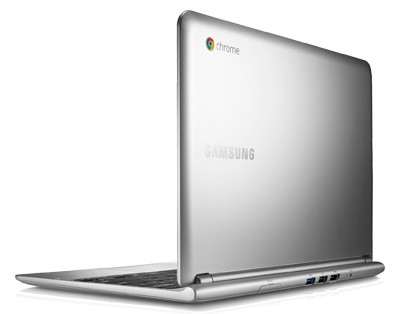
Google announced on Thursday a new budget Samsung Chromebook laptop, dubbed as “the computer for everyone.”
The 11.6-inch Samsung Chromebook — priced at $249 and available for pre-order now from Amazon, Best Buy and other retailers — aims to be the second or third computer in your household. It runs on Chrome OS and is super slim, measuring only 0.8 inches thick and weighing 2.5 pounds.
The device packs a Samsung-made ARM Cortex-A15 processor, 2GB of RAM and 16GB of flash storage. The screen resolution is 1,366 x 768, and the computer supports 1080p video playback as well as Bluetooth 3.0. It also comes with one USB 3.0 and one USB 2.0 port, is rated at hours of battery life and includes 100GB of free cloud storage on Google Drive.
Given the specs, the machine is less powerful than the Chromebooks Google unveiled earlier this year. Even for customers who already use Chromebooks as a main computer, Google is positioning the new model to serve mainly as an additional device — for example, to casually catch up on emails in the kitchen or connect with loved ones via video chat.


 8:54 PM
 Lecor Martineau

 Posted in