make money with your web site
Showing posts with label Tech News. Show all posts

Samsung Galaxy S4 In-Depth Review


After months of speculation, the Samsung Galaxy S4 has finally been unveiled at an event in New York. With a larger screen, faster processor and range of new features, it's the company's new flagship smartphone.

As such, it's got more power and more up-to-date features than the iPhone 5 and pre-empts the upcoming iPhone 5S. We had people present at the launch to give us the lowdown on the phone and help us find out if it matches up to the hype. 


The first thing to note is that the Galaxy S4 looks similar to the Samsung Galaxy S3, and builds on that phone's looks. The Galaxy S4 is a little bigger, thanks to its 4.99in screen, but not as much as you might think: at 136.6x69.8x7.9mm, it's roughly as wide as the S3, but around 5mm longer, and around 1mm slimmer.

The result is the Galaxy S4 feels good in the hand and every bit as comfortable to hold as the S3. It's certainly not us unwieldy as the Samsung Galaxy Note 2.

There are a few notable changes between the phones' designs, including a metallic banding running around the edge of the Galaxy S4. Clearly, Samsung felt the need not to mess too much with a winning formula, but we would have personally loved to have seen an aluminium chassis, as on the HTC One, rather than the plastic used here.


SCREEN
The 4.99in Super AMOLED display is gorgeous. It has a Full HD, 1,920x1,080 resolution with a high pixel density of 441ppi. While that's certainly impressive, the HTC One has the same resolution but a smaller screen, so a higher pixel density of 468ppi and the Sony Xperia Z has the same size screen and resolution, so has a matching 441ppi. What's important is that on all three phones everything looks pin-sharp and there's no danger of spotting individual pixels.

It’s worth noting that you can't directly compare the Galaxy S4 to LCD-based Full HD handsets, such as the HTC One. This is because Samsung continues to use a Super AMOLED display with a PenTile pixel arrangement. Simply put, this means there are only two coloured sub-pixels per pixel instead of three. The reduced colour resolution is made up for by the excellent contrast and blacks that AMOLED provides (as well as lower power usage), but it’s a matter of taste which screen type you prefer. When we saw the phone we found its screen bright and colourful, but we'll save a full opinion for when we can do a proper side-by-side comparison.

As expected, the screen can be operated just by hovering your finger over it, giving rise to two new features. Air View lets you hover over content, such as an email or photo, to preview it without having to open it. Air Gesture lets you change tracks, scroll through a web page or answer a call with a wave of your hand. We haven't had chance to try the system out yet, but this should make fine-control of the touchscreen operating system that little bit easier.
Gorilla Glass 3 helps make the phone durable, although we'd still recommend a screen protector or case if you're going to keep your phone in a pocket with sharp items, such as keys.


PROCESSOR
The phones at the event were kitted out with Exynos octo-core processors running at 1.6GHz. It's not strictly an eight-core phone, though, as it uses ARM's big.LITTLE architecture. The eight cores are divided in two, with four high-power, complex cores to do the heavy lifting and four smaller, power-efficient cores for more mundane tasks. The S4's architecture is designed so that the phone can switch seamlessly between the different types of core.

However, at the launch Samsung confirmed that the UK version of the phone will have a measly four cores. The good news is that the UK S4's Snapdragon 600 chipset will run at a faster 1.9GHz, which will hopefully go some way to making up for the cores shortfall.

The Android 4.2.2 Jelly Bean OS certainly felt fast on the phone and web browsing was similarly as slick. We can't imagine that things will get worse with the UK version of the phone, but we'll have to save final judgement until we get our hands on a production model.


BATTERY
The battery on the S4 is an impressive 2,600mAh. That's around 500mAh bigger than the S3's battery and bigger than the vast majority of batteries used in smartphones today. With such a big battery it shouldn't have any problems providing all-day power.


CAMERA
The camera has been upgraded to a 13-megapixel model. It has a Backside-illuminated (BSI) sensor for better low-light sensitivity, although there's also a flash for when it's really dark. We took a few test shots in the dark demo hall and they looked fine on-screen, but actual quality tests need to wait until we have a test handset.

At the front is a 2-megapixel BSI camera. While it can be used for video calling, it can also be used with Samsung's Dual Camera mode, which lets you superimpose a shot from the front camera on the footage from the rear camera. In practice, this means that you can have your floating head, bordered by a postage-stamp frame imposed on the picture taken by the main camera. It feels a little gimmicky.

The front camera also serves a purpose in controlling the phone with Smart Pause. This technology knows when you're looking at the screen so it can, for example, pause a video when you turn your head and look away. As soon as you look back, the video continues. It's a neat way of using the cameras for more than just still images and video.


STORAGE
The Samsung Galaxy S4 will be available in versions with 16GB, 32GB and 64GB of storage, although it's expandable by up to 64GB via the microSD card slot. Prices for the models haven't been announced yet, but it may well work out much better value to buy the 16B or 32GB models, then upgrade storage as and when you need it.


TRACKING
Samsung has said that the Galaxy S4 will get security tracking built in. This works in a similar way to Find My iPhone, letting you track a stolen handset online.

However, while Apple's implementation can be wiped out by resetting the phone, Samsung has got something more secure up its sleeves. By partnering with Absolute, which makes the Computrace laptop-tracking software, Samsung has got firmware persistence technology built into the Galaxy S4. In other words, the tracking software sits in main firmware and so it can survive a full hardware reset.

Security tracking is part of the Knox security suite, which is designed to make the platform more secure. It's aimed at business users, where it will also provide a business and personal side of the phone, so that you only have to carry one device. The work mode can be locked down and managed by your company, while the personal side is yours to do with as you will; importantly, both sides are completely independent.

We're in the process of finding out if the security tracking feature will be available to consumers, or if it will only be available to business users.


ACCESSORIES
As well as what comes with the phone, Samsung is also pushing the phone's lifestyle aspect with a selection of Galaxy S4 accessories. These range from health accessories that can monitor how active you are and your weight and heart rate, to a gamepad that you clip the phone into. There's also a wireless charging dock, so you can charge your phone simply by laying it on the charging pad.


RELEASE DATE
You'll still have to wait a while to get your hands on the phone; Samsung's official release date for the Galaxy S4 is 26th April, and this assumes there are no manufacturing problems, such as HTC is fighting with its HTC One. Official pre-orders for the phone are now open, as of 28th March.

Best 802.11ac Routers to Choose From


The latest 802.11ac standard is the latest and arguably the most anticipated Wi-Fi standard, thanks to its much faster speeds. Since it was first showcased more than a year ago, there's been an influx of new routers that support the new Wi-Fi standard.

There's a different side to this development, however: we can't enjoy the new 802.11ac standard the way we do 802.11n just yet. That's because as Wi-Fi standards go, in order to have 802.11ac Wi-Fi connections, in addition to a supported router, you'll also need hardware clients, such as laptops, tablets, or smartphones, that support this standard, and currently there are very few clients that have built-in 802.11ac support. However, Windows computer owners can quickly add 802.11ac to their systems via a USB adapter, such as the TEW-805UB from Trendnet. Mac users can rest assured that 802.11ac will soon be supported.

However, everyone can benefit from a good 802.11ac router, and that's because they all support Wireless-N. Basically, 802.11ac routers are N900 or N600 routers with support for 802.11ac on the 5GHz band. 

Here are the top 802.11ac routers on the market. These are the first routers from their respective vendors, so it's possible that better 802.11ac routers could be on the way.


Trendnet TEW-812DRU


The good: The Trendnet TEW-812DRU AC1750 Dual Band Wireless Router offers excellent Wi-Fi performance and ease of use at a low cost.

The bad: There's no wall-mounting option and the router's USB plugged-in storage performance is slow.

The bottom line: The Trendnet TEW-812DRU is the most affordable 802.11ac-enabled router on the market, and it offers excellent performance.


The Trendnet TEW-812DRU is by far the most affordable 802.11ac-enabled router on the market. At $150, it's in fact cheaper than many N900 Wireless-N routers. And the low price doesn't mean low performance. In my testing it's among the top three fastest routers on the market; it also offered a very stable Wi-Fi signal.

Its only drawbacks are the slow USB storage speed, when working with an external hard drive plugged into its USB port, and the lack of wall-mounting options.


Netgear R6300


The good: The NetGear R6300 WiFi Router supports 802.11ac and offers superb performance. It comes with a nice mobile-app-enabled Web interface that's easy to use.

The bad: The Netgear R6300 WiFi Router is bulky. Its mobile app only works within the local network and the performance of its network storage and 2.4GHz Wi-Fi band could be better.

The bottom line: The Netgear R6300 WiFi Router is for a high-standards, low-ego type of user: it's not something you can show off aesthetically, but a powerhouse for a robust, fast home network, both for now and tomorrow.


The Netgear R6300 router is the first 802.11ac router I've seen that offered close to what the 802.11ac Wi-Fi standard is supposed to be. In my testing, it proved to be the fastest Wi-Fi router by far, when coupled with another 802.11ac client (which, by the way, was another R6300 configured to work as a media bridge). The router, however, works with all existing Wi-Fi devices on the market, offering up 450Mbps Wireless-N on each of its two frequency bands.


Asus RT-AC66U


The good: The Asus RT-AC66U 802.11ac Dual-Band Wireless-AC1750 Gigabit Router offers great performance on the 5GHz frequency band, and lots of features for homes and businesses.

The bad: The Asus RT-AC66U runs rather hot, and is relatively expensive.

The bottom line: The Asus RT-AC66U is an excellent router and is currently one of the best options among those that support the latest 802.11ac Wi-Fi standard.


The Asus RT-AC66U is basically the N900 RT-N66U with support for 802.11ac. It has almost exactly the same features as the previous model. One of its novelties is the fact that it can work as a VPN server, making it an excellent choice for business users. Also, it's capable of hosting a cloud storage service when coupled with an external hard drive. You can also use a USB cellular modem with its USB port as a backup Internet connection if your DSL (or cable) goes down, or when you're out and about.


Buffalo AirStation AC1300 / N900 Gigabit Dual Band Wireless Router WZR-D1800H


The good: The Buffalo AirStation AC1300 / N900 Gigabit Dual Band Wireless Router WZR-D1800H supports 802.11ac and all previous Wi-Fi standards. It's very fast on the 5GHz band and is comparatively affordable.

The bad: The router's 802.11ac speed, while very fast, isn't close to what the new standard is supposed to offer. Its 2.4GHz band Wireless-N performance could use some improvement, and the support for USB external hard drives is limited and buggy.

The bottom line: The Buffalo AirStation AC1300 / N900 Gigabit Dual Band Wireless Router WZR-D1800H offers great value by adding support for 802.11ac on top of a high-end N900 router without increasing the price. However, the router doesn't have enough appeal for those who just need simple, low-budget wireless home networking.


What a crazy name, you might think, but the Buffalo has a good reason for the lengthy name: it was the very first 802.11ac router on the market. The vendor probably wanted to make sure that users would be aware of its new features.

Like the Netgear R6300, it supports Wi-Fi clients that use any previous Wi-Fi standard, be it 802.11n/g/a or /b, offering dual-band Wireless-N, with each band being able to provide up to 450Mbps of bandwidth. So even without any 802.11ac clients at home, you can still enjoy its performance, just as you would a Wireless-N router.


D-Link DIR-865L


The good: The D-Link DIR-865L Wireless AC 1750 Dual Band Cloud Router offers good performance on the 5Ghz band and can be easily managed via the Internet, using a browser or mobile device.

The bad: The DIR-865L's performance on the 2.4Ghz band and its network storage feature could be better. The router's cloud-based features are limited and fragmented.

The bottom line: The D-Link DIR-865L Wireless AC 1750 Dual Band Cloud Router makes a decent investment thanks to its cloud-based features, support for 802.11ac, and good performance on the 5Ghz band.


The D-Link DIR-865L is the first 802.11ac router from D-Link, and it supports the company's new cloud approach: you can manage the router via the Mydlink portal, using a Web browser or mobile app. Other than that, it's a decent router that offers excellent performance on the 5GHz band (with 802.11ac clients or Wireless-N clients). On the 2.4GHz band, however, its performance could use some improvement.

Samsung Galaxy S4 To Be Release on March 2013

March 15 or March 22 only suggest that Samsung's Galaxy S4 is coming to town a few weeks from now, and many are reviewing the list if the latest rumours about the flagship device would tally with the ones set for unwrapping next month.

Do we get to see jaws dropping by the time Samsung pulls down the veil covering its second 2013 handset masterpiece, the first one being the Galaxy Note 3 (which likely will debut earlier via the Mobile World Congress in Barcelona)? 


It's worth revisiting the specs that numerous reports said would practically make up the sleek look and powerful beast that is the Galaxy S4.


Is it quad-core or 8-core?

For some time, and experts agree, all reports about the latest Galaxy S smartphone point to a CPU upgrade that will see the S4 strutting the Exynos 5 Octa 8-core processor. Developed by Samsung, this replaces the Qualcomm CPU that came with the Galaxy S3 and is generating excitement for its apparent brute ability without gobbling too much battery juice.
But the storyline saw a twist this week when SamMobile reported that Samsung's premier handset will hum into its processing tasks with a maximum speed of 1.9GHz on a quad-core chip provided by Qualcomm again. It appears that some experts called it right in insisting that eight-core mobile computing will not be a reality until 2014.


What exactly are the display elements?

Earlier this year, the Galaxy S4 is said to sport a bendable screen, making the front portion of the device virtually unbreakable because the glass material covering its screen has been tempered for better flexibility. Samsung even showcased a prototype handset that bears the actual screen flavour.

It turned out, however, that the technology will only be ready for mass production by 2014, at the earliest so speculators trained their attention to the latest Corning Gorilla glass screen. There was even a suggestion that Samsung would wait out until June this year to launch the Galaxy S4 in order to make sure that phone rolls out with the best Corning technology to date.

Nothing is definite till now on the overall display attributes of the S4 except that it will have a better Super AMOLED rendering that is viewable on its 1080p 4.99-inch screen. Another possible addition, though remote by now, is on-screen gesture capability, with Samsung reportedly mulling the use of maXTouch S sensor that was first seen in a Sony Xperia handset.


Do we get to see real high-end camera offerings this time?

On S3, tech experts could only hand down decent remarks about the phone's 8MP rear-shooter. The euphemism also meant that Samsung could have done better because its snapper is easily beaten by the competition like HTC's One X, according to Gotta Be Mobile.

Hopefully, with leading smartphone brands fitting 13MP capturing tools with their products, Samsung would equal or raise the bar a bit higher. HTC has been bragging that it is jumping to the UltraPixel level via the HTC M7 (or HTC One), which maybe Samsung can replicate with last-minute adjustments prior to the Galaxy S4's launch time.


Will Samsung tweak the Wi-Fi signal?

This is crucial because as Gotta Be Mobile noted, all smartphones connect via Wi-Fi. And Samsung would further boost the Galaxy S4's appeal if owners can rely on faster and more stable wireless connection. This feature will be made possible if Samsung would use the new Broadcom 4335 5G Wi-Fi chip. When partnered with a compatible wireless router, S4 users will experience the best Wi-Fi technology there is, the same Gotta Be Mobile report said.


How much juice can be squeezed from the S4 battery?

From 2100mAh battery, the Galaxy S4 will reportedly pack a 2600mAh battery and paired with better chip components, the prospect of using the new Samsung smartphone longer in a single charge is much higher. And if Exynos 5 Octa CPU actually makes it to the handset, many owners should regale with the promise of 70 per cent less power requirement of Exynos. That means more gaming, media playing and communicating hours on the Galaxy S4 before users scramble to look for the nearest power outlet.


Will it be JellyBean or Key Lime Pie on S4?

The best bet, admittedly, is the latest JellyBean when the Galaxy S4 comes right out of the box. But many are hoping that Samsung would able to persuade Google into deploying Android 5.0 first via the S4. Tall order maybe but still possible. One can only imagine the smooth collaboration between the latest TouchWiz skin and Google's KLP, which later on this year skirmish with Apple's iOS 7.

We are so looking forward if all these questions or at least most of them will get the right answers in a few weeks' time.

iPhone 5S: What and When to Expect


The iPhone 5 may only be a few months old, but we're already hearing information about a successor, which may be known as the iPhone 5S.

The early arrival of the iPad 4 and the iPad mini - just eight months after the release of the iPad 3 in March - has meant that Apple still has the ability to surprise and we could well see an iPhone 5S appear earlier than expected.


iPhone 5S release date

That means the iPhone 5S release date could be as early Spring 2013. However, we believe it's still likely that we'll see another iPhone later in 2013.
But that's not what everybody thinks: the Chinese-language Commercial Times estimates that full commercial production of the rumored iPhone 5S will begin as early as Q1 2013. That's borne out by further rumors suggesting a March manufacturing start date, followed by a mid-year release.
Digitimes reckons the iPhone 5S release date will be a little later, citing predicted sales targets of relevant component manufacturers. "Apple is expected to introduce its next-generation iPad and iPhone series around the middle of 2013... Component orders placed by Apple, which climbed to high levels prior to the iPhone 5 rollout, will rise again between March and April, the observers indicated."


iPhone 5S rumors

Some sources claim that Apple has is ploughing ahead with the next iteration of the popular handset, due to low yield rates of the iPhone 5 on the assembly line at Foxconn.
Apparently, because of the fragility of the parts used to make the device, many break before they even see the light of day.
The leaked handset has already been referred to as the iPhone 5S, in keeping with Apple's naming convention for updates to the outward appearance of its iconic device.


iPhone 5S display

iPhone 5S or iPhone 6 will include a Super HD screen display and camera according to new reports in December 2012. The China Times says a 'Touch On Display' panel is being developed by Taiwanese supplier Innolux with 10 point multi-touch and a 0.5mm thickness. Apparently the site spoke to sources inside Apple's supply chain.
iPhone 5S casing

According to further rumours, the iPhone 5S might not be the only Apple handset we see this year - rumours abound about cheaper, plastic iPhones, while Apple could be readying an even bigger smartphone to launch in June, apparently called the iPhone Math.
According to the hit-and-miss China Times wesbite the iPhone Math will carry a sizable 4.8-inch display and an 8MP camera.
The new, larger, lower-cost handset could be aimed at emerging markets such as China.


iPhone 5S camera

In January 2013 iLounge received information that indicated the handset would sport the same design as the iPhone 5 with the key difference being a beefier camera and larger flash on the back.
That's hardly ground breaking upgrades from Apple, with the touted 13MP camera on the 5S hardly bucking the trend considering the Sony Xperia Z already has this and we'd expect the Samsung Galaxy S4 to offer up something similar.


iPhone 5S wireless charging

According to CP Tech, Apple filed a patent application last month for Wireless Power Utilization, a wireless charging system with near-field magnetic resonance (NFMR). That means we'll get wireless charging at last.

iPad5 Rumours and Speculations


While many people are focusing on the next generation of iPhone or iPad mini, the iPad 5 release date itself is perhaps more important. The iPad 5 is expected to be Apple’s best-selling iPad, and there are lots of rumours already about what the new iPad 5 will be like. 

Apple itself has typically kept quiet about any developments on the iPad front, but we expect iPad 5 rumours, especially regarding the new iPad 5 release date to intensify over the next few months.


New iPad 5 release date

Speculation regarding a new iPad 5 release date is rampant at the moment, but we do expect a new iPad 5 model to be released at some point in 2013.

Narrowing the new iPad 5 release date down further than that requires some speculation. We can look at Apple’s history with iPad release dates. It’s interesting to note that the first iPad was released less than two years ago in April 2010. Apple then followed that with an iPad 2 in March 2011, iPad 3 in March 2012, and a surprise iPad 4 in November 2012.

History suggests that the new iPad 5 release date will be March 2013

So if we’re looking for a pattern to set a date for the new iPad 5 release, March 2013 would seem a good date to pick. This is when we expect the new iPad 5 release date to be.

Topeka Capital Markets analyst Brian White claims that his checks with industry sources during the International Consumer Electronics Show in Las Vegas in January indicated that the iPad 5 would arrive in March, alongside the iPad mini 2 with Retina display.

However, the new iPad 4 was released in November 2012, just seven months after the iPad 3. And a new iPad 5 March 2013 release this would mean just five months between the iPad 4 and iPad 5 release date.

This does seem a little concertinaed to us, and Apple would be open to grumbles from iPad 4 owners about buying a technology that was so quickly superseded. Not that we expect that to stop Apple from forging ahead with the latest technology, but it does seem a little swift.

In mid-January, it was reported that Sharp had reduced the production of Apple’s full-size iPad displays to a ‘minimal level’, which some said indicates an upcoming iPad update.

Rumours suggest a new iPad 5 release date of June 2013

Jefferies analyst Peter Misek wrote in a research note in December that he believed Apple’s fifth-generation iPad will be thinner and lighter with a June 2013 launch.

There seems to be no firm reason for the slightly later release date, although it makes sense when you consider the recent release of the iPad 4, and the impending Apple Television. A slightly later June launch could make sense.

The new iPad 5 released date could be late 2013

It may be that Apple decides to move the new iPad 5 to a later point in the year, perhaps October or November 2012 to match up with a pre-Christmas launch of other products like the iPod and iPhones.

This later iPad 5 release date would also allow Apple to focus on an Apple Television launch in the first half the year.


New iPad 5 rumours

The new iPad 5 rumours are starting to come through the pipeline, although they are few and far between so far. Here is what we expect the new iPad 5 features to include.

New iPad 5 will have one LED Light Bar Retina Display

The new iPad 5 will keep the 9.7in Retina Display, however rumours suggest that the new iPad 5 will have just one LED Light Bar inside (the current iPad has two LED Light Bars). This is rumoured to be because Apple will be using newer, more efficient LED Light Bars than previously.

The LED Light Bars enable the iPad to display brightness and colour accurately, and two are currently required to power the the iPad Retina Display.

New iPad 5 will have IGZO display

Jefferies analyst Peter Misek wrote in a research note on that he believed Apple’s fifth-generation iPad would have an IGZO (Indium gallium zinc oxide) display. These displays allow for smaller pixels which enable a device to have a higher resolution, or a higher reaction time for the display.

The IGZO displays are rumoured to be developed by Sharp. Sharp said the new technology allows for twice the detail of existing panels at the same transparency, which means high-resolution devices can be designed that require less power and space for backlighting. The company said the new displays cut power consumption by up to 90 percent versus those currently in use.

New iPad 5 will be thinner and lighter

Taiwanese news source DigiTimes reported first on switch to a single LED Light Bar in the upcoming new iPad 5 release. Removing one of the LED Light Bars will free up some space inside the new iPad 5, enabling Apple to produce a lighter and thinner device. It also has an advantage of reducing the power requirement of the new iPad 5, again enabling Apple to create a smaller and thinner new iPad 5 because it will not require so much battery space (the iPad is essentially one large battery with components inside and a display attached to it).

In January, trusted analyst Ming-Chi Kuo from KGI Securities said that he predicts that Apple will launch a thinner, lighter 10in iPad in 2013, alongside a Retina iPad mini 2 and a cheaper iPod touch. The new iPad 5 could have a design similar to the iPad mini, and could be available in the same black and slate and white and silver designs as the smaller tablet.

New iPad 5 will look like the iPad mini

Although we have no firm idea of what Apple is planning with the new iPad 5 design, we can reasonably believe that it will take its cues from the recently restyled iPad mini and iPhone 5.

As with the iPad, it comes in two colours: white and black (although further colours have been introduced to the iPod touch, and these are a possibility).

There has also been this rumour that the next-generation iPhone 6 will come in a variety of colours. It is possible the the new iPad 5 will also come with more colourful options.

New technology will boost iPad 5′s performance and reduce power consumption

Taiwan Semiconductor Manufacturing Company (TSMC) is developing a 16nm process that Apple may adopt for future iPhone and iPad chips. The process should boost performance and reduce the power consumption of new Apple products.

New iPad 5 will have tougher Gorilla Glass 3 display

Corning has developed a new version of its Gorilla Glass for smartphones and tablets that it says will result in 40 percent fewer scratches, and will arrive in devices later this year, possibly including Apple’s iPhone 6, iPad 5 and iPad mini 2.

Samsung Shows Youm - Flexible Phone OLED Screen


By showing off a phone with a flexible screen, Samsung is hinting at a day when we might fold up our large phone or tablet screens as if they were maps. 

The Korean electronics company provided a glimpse of such a device at a keynote speech Wednesday at the International CES gadget show in Las Vegas. It's an annual showcase of the latest TVs, computers and other consumer-electronic devices. 

WHAT IT IS: Brian Berkeley, head of Samsung Electronics Co.'s display lab in San Jose, Calif., demonstrated a phone that consists of a matchbox-sized hard enclosure, with a paper-thin, flexible color screen attached to one end. The screen doesn't appear flexible enough to fold in half like a piece of paper, but it could bend into a tube.

The company also showed a video of a future concept, with a phone-sized device that opens up like a book, revealing a tablet-sized screen inside.


HOW IT WORKS: The screen uses organic light-emitting diodes, or OLEDs. Only a thin layer of these chemicals is needed to produce a bright, colorful screen. They're used in many Samsung phones already, though with glass screens. For the bendable phone, Samsung laid the chemicals over thin plastic instead of glass. That's a trick you can't pull off with liquid crystals in standard displays.

WHY YOU'D WANT IT: You could pack a bigger screen in your pocket. In a more conventional application, Berkeley demonstrated a phone with a display that's rigid, but bent around the edges of the device, so it can show incoming messages even with a cover over the main screen. In short, OLEDs free designers to make gadgets with curved screens.

WHY IT MIGHT NOT WORK: It's tough to use a touch screen if it bends away from your finger. Flexible OLED screens have been demonstrated for years, but the OLED chemicals are extremely sensitive to oxygen, so they need to be completely sealed off from the air. Volume production of flexible displays that remain airtight has so far stumped engineers. Samsung's screens aren't yet flexible enough to fold, just bend.

AVAILABILITY: Samsung didn't say anything about when flexible displays might be commercialized.

"The concept of the flexible screen has been around for some time, but it finally looks as if Samsung is really going to deliver on that technology," said Stephen Bell, an analyst with Keystone Global.

Samsung Exynos Octa Processor


Samsung has announced the Exynos 5 Octa processor at CES 2013, an eight-core chip built using ARM’s interesting big.LITTLE concept for improved power and lower energy consumption.

Samsung has shown why it’s one of the most exciting companies working in mobile tech at the moment, by announcing the Exynos 5 Octa processor during its keynote presentation at CES 2013. Just in case the name hasn’t given it away, this is an eight-core processor, and it’s destined to one day power the smartphone in your pocket. 

The new chip will one day replace the Exynos 4 Quad, now powering an astonishing 53 million devices worldwide, as Samsung’s go-to chip for its flagship phones. CEO Stephen Woo said it will provide, “A level of pure processing power never seen before in a mobile device,” before using a reference device to show the processor in action, when its multi-tasking and gaming abilities were briefly demonstrated.

Although the Exynos 5 Octa is billed as an eight-core chip, not all its processor cores were born equal and a more accurate description is that it’s a dual quad-core processor. This is because it’s one of the very first system-on-a-chips to be built using ARM’s big.LITTLE concept.


Dual quad-core processing power

Rather than a single eight-core chip, it has two quad-cores inside – one being a quad-core ARM Cortex A15 and the other a quad-core Cortex A7. The Cortex A15 deals with the tough stuff but passes off the easy tasks to the Cortex A7, or they can both be fired up to really show off. This means it’s strong enough to provide all the power you may need, while at the same time being smart enough to conserve energy when it can. If you’re wondering just how much difference the Exynos 5 Octa and other big.LITTLE chips will make when used in a device, ARM’s CEO Warren East said he expects “twice the performance and half the power consumption” compared to today’s best offerings.

If this approach sounds familiar, it’s similar to the companion core found in Nvidia’s Tegra 3, which avoids waking the quad-core beast and deals with the easy tasks on its own. The difference is, the Exynos 5 Octa’s cores can all work together when the need arises. Samsung has built its new processor using a 28nm manufacturing process, which it promises will help keep power consumption to a minimum.

Now we’ve got you all excited about the Exynos 5 Octa, you’ll want to know when it’s going to be available, right? Sadly, Samsung glossed over this point as it moved on to other things during its presentation, but there have been rumors it’ll be powering the Galaxy S4 when it’s released later this year.

RIM to Announce BlackBerry 10


Research In Motion says it will debut on January 30 new smartphones running its revamped BlackBerry 10 operating system, which is widely viewed as the company's last chance to stay relevant versus Apple iPhone and Google Android devices. 

The upcoming announcement is expected to include shipping dates and prices. AT&T, Verizon Wireless, Sprint, and T-Mobile confirmed to mobile industry newsletter FierceWireless this week that they'll carry the new phones. RIM officials previously said several models will be screen-only devices and at least one phone will use the conventional QWERTY keyboard.

RIM announced details of its new operating system in 2012. Users will get efficient multitasking, a modern web browser, a new interface for on-screen keyboards, and a profile feature for quickly switching your phone between office and personal configurations.

Notably, the phones can run applications written for a 2011 version of Android, but only if the applications are first repackaged through BlackBerry's software development tools. Whether that would be up to users, or up to the application's original programmers, remains to be seen. The ability for a mobile computing platform to run programs made for another is unique, said Farpoint Group's Craig Mathias, a well-known analyst in the mobile field. But not all features will be supported, according to information on the BlackBerry software development site. Also unclear is whether the phones will be able to run software designed for newer versions of Android. Software compatibility is a problem even among different versions of individual phones based on Android, he noted.

Early reviews of BlackBerry 10 phones, published by sites such as Cnet, Gizmodo, TechRadar, and USA Today, have been mostly positive.

BlackBerry remains viable in law firms even as the past few years saw an attorney exodus to the iPhone. Almost 50 percent of attorneys surveyed in 2012 by the American Bar Association used iPhones; more than 30 percent were still using BlackBerry. The CIOs at DLA Piper and Holland & Knight said at the time they're seeing a clear shift toward the Apple platform and were taking a wait-and-see approach to BlackBerry 10.

Mathias said that he is optimistic about BlackBerry 10 devices having impressive design, but less so about RIM's overall chances of swaying iPhone and Android customers.

"RIM will build a very high-quality product," Mathias said, in Ashland, Mass. But even if the Waterloo, Ontario-based RIM makes all the right technical and marketing moves, it still probably won't have features compelling enough to make iPhone and Android users switch, he said. Nor was Hewlett-Packard or Microsoft able to make significant inroads with their own mobile devices, despite having far larger budgets than RIM, he observed.

RIM still has a good reputation for their enterprise deployment software and for their wireless security features, Mathias added. But, he said, the importance of such features is shrinking in a bring-your-down-device world.

USB 3.0 Double-Speed Version Due to Arrive in 2014

The first devices that take advantage of the new standard's 10Gbps data-transfer speed should arrive in 2014. 


Computing industry powers are doubling the data-transfer speed of USB 3.0 from today's 5 gigabits per second rate to 10Gbps. 

The move will uncork speed bottlenecks of external SSD storage devices, open up options such second monitors, and help confine the even faster Thunderbolt interface to a high-end niche.

But it won't happen immediately. The specification should be done in mid-2013, which "will enable initial products to appear in late 2014 with a much broader availability of products in 2015," according to the USB 3.0 Promoter Group, which announced the faster Universal Serial Bus work today at the CES show.

That group's members are Hewlett-Packard, Intel, Microsoft, Renesas Electronics, ST-Ericsson, and Texas Instruments. It's a powerful alliance, to be sure, but it's hard to move the entire electronics industry rapidly to a new standard. The specification for USB 3.0, aka SuperSpeed, was finished in 2008, but it wasn't until four years later that USB 3.0 really took off as a standard part of Intel hardware in 2012.

To take advantage of the double-speed USB 3.0 interface, devices such as computers, hubs, and digital cameras will need new USB controller hardware. However, the new version of USB 3.0 uses the same connectors, so existing USB devices can be plugged into the higher-speed ports.

USB 3.0 cables may or may not work. "Existing SuperSpeed USB cables are not certified to operate at 10 Gbps; it is possible that some existing SuperSpeed USB cables may be capable of operating at 10 Gbps," the group said.

USB has been a remarkable success, spreading from the computer industry to many other segments of the market including cars, mobile phones, and TVs. The Universal Serial Bus Implementers Forum (USB-IF), which oversees the standard, said there are more than 720 USB 3.0 devices

Another area of development: upgrading USB's ability to carry electrical current so it can be used to charge mobile devices faster and even power laptop PCs.

There's some good news for Thunderbolt, which is useful today by virtue of its convenience and performance. Each Thunderbolt port offers dual 10Gbps channels and the ability to daisy-chain multiple Thunderbolt devices. Its utility is expanding with the arrival of optical Thunderbolt cables. And Thunderbolt's future also is warmed by Intel's plan for faster versions of the standard.

But so far Thunderbolt is almost completely nonexistent on personal computers besides Apple models, and cables remain expensive. USB is a necessity, but Thunderbolt remains a luxury.

The new USB standard also could make life harder for another new high-speed communication standard, PCIe Cable.

Samsung Galaxy S4 Rumours


Samsung is expected to showcase the next-generation Galaxy S smartphone at the 2013 Consumer Electronics Show (CES).


Phone Arena reports there will be no official announcement of the Samsung Galaxy S4 and neither will the smartphone appear in public. Samsung will instead show an early model to key partners only.

The report quotes information from South Korean website MT and suggests Jay Lee, the group's vice chairman, will show the Galaxy S4 to carriers and other partners. MT also claims the successor to the Galaxy S3 will have a 5in full HD screen with a resolution of 1080 x 1920 pixels. The report adds the processor is likely to be the Exynos 5440, a quad-core ARM Cortex A-15 based chipset.
Meanwhile, a photograph of the Galaxy S4, claimed as a press image, has been leaked. The photograph reveals the design of the new smartphone resembles that of the S3 and the Premier. In addition, the device does not have a Home button, which suggests it may have on-screen buttons. Finally, the bezel around the device is much thinner and the display is larger than earlier.

The leaked photograph, on SamMobile, also has details of hardware configuration and these are marginally different from those in the MT report. SamMobile believes an Exynos 5450 chip featuring a quad-core processor clocked at 2GHz will be used and this will be paired with a Mali-T658 graphics unit and 2GB of RAM. In addition, the handset will carry a 13 megapixel rear-facing camera and a two megapixel front-facing camera. The device will run on Android 4.2.1 (Jelly Bean).

Meanwhile, in response to questions, Samsung's Lebanon Facebook page has indicated the Galaxy S4 will not be released before May. The Facebook post is not an official statement but it does seem reasonable; the Galaxy S3 marks its first anniversary in the same month.

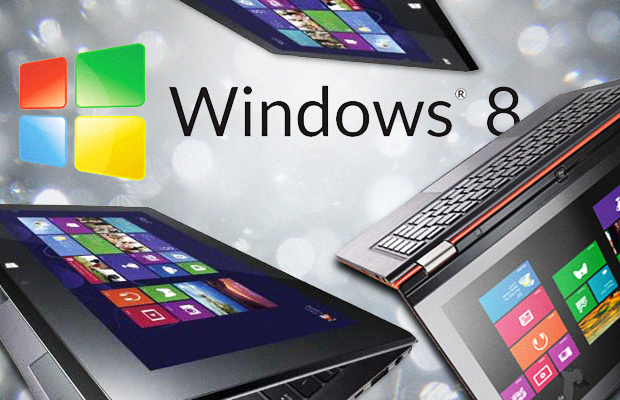
Windows 8 Complete Guide


Microsoft's newest operating system has a whole new interface and loads of new features. Of course, learning a whole new operating system always takes a little time. Here are our tips for getting up to speed quickly and getting the most out of Windows 8.


Preparing for Windows 8

Check compatibility
Is the software and hardware on your PC compatible with Windows 8? It's easy to find out with the Windows 8 Upgrade Assistant.

Get your PC ready
If you're planning to upgrade to Microsoft's latest OS, now might be a good time to begin preparing your PC.

Try it out -- sort of
You've probably heard about the new Metro interface in Windows 8, but how to know if you'll like it? Current Windows users can get a sneak peek into the look and feel of Metro with the free metro7 app.

Get Windows 8
Microsoft's biggest desire is to get you using Windows 8, and fast. Here's how to use that $40 upgrade to flip older versions of Windows to Windows 8.


Starting up and shutting down

Skip the log-in
Users who don't need the security of a lock screen and a log-in screen can bypass both through a few simple steps.

Get the start menu back
Three free utilities can replicate the classic Start button and menu in Windows 8.

Going back to start
Clean and simple, Windows 8's Desktop mode also lacks any apparent ways to get back to Metro. Here's three tips on how to do just that.

Use a picture as your password
Tablet and PC users alike can create a picture password in Windows 8 as a visual way of signing in. Here's how.

Shut down with a tile
Shutting down or rebooting Windows 8 can be as easy as point, then click, if you want it to be.


The basics

Keyboard shortcuts
Windows 8 has some new keyboard shortcuts that will help you get around Microsoft's latest OS.

Set default programs
Windows 8 chooses its default players to run your music and video, but what if you want different programs to open your files? Here's how to change them.

Task Manager
The most neglected feature of Windows since it landed in 1995, Task Manager has finally received some love in Windows 8. Here's what's new.

Automatic backups
The new File History feature in Windows 8 can automatically back up your documents, music, pictures, and other personal files.

Sync your devices
One of the best things about Windows 8 is that you can sync settings, apps, and more across multiple computers and tablets. Here's how you do it.

Printing
Printing from a Metro app in Windows 8 works differently than printing from a Desktop app. So, how do you print from a Metro app?

Get Windows Media Center back
Windows Media Center isn't included with Windows 8, but for a limited time, you can get it free of charge.


Advanced tips

Run Windows 8 Desktop and Metro side by side
Not sure if you prefer Windows 8 in Desktop or Metro view? With an external monitor you can use both at the same time.

Dual-boot with 7
Dual-booting your Windows 7 PC with Windows 8 can help you ease into using Windows 8.

Make it kid-safe
Parental controls in Windows 8 are more configurable and robust than ever before. We'll show you how to use parental controls in Windows 8 to help keep kids safe while using a PC.

Related Posts Plugin for WordPress, Blogger...